Friday, 28 February 2020

Science in a Flash: How to give a successful flash talk


The American Society for Biochemistry and Molecular Biology invites you to attend a free webinar on 12th March, 7pm GMT, UK (2pm EST, USA).

Effective communication skills are critical to your success as a scientist. We often have only a few minutes, or a few sentences, to impress employers, influence granting agencies, or provide a quote to journalists. So, what if we gave you one figure, three minutes, and a microphone to describe your research – could you do it?

Learn tips and tricks for giving a fast, informal presentation in this webinar.


Wednesday, 22 January 2020

The WISE Festival – Celebrating the International Day of Women and Girls in Science

The following is happening at the British Library on Tuesday 11th February
Laugh, sing and think at this mini festival celebrating and raising the voices of women in science.  
Drop in to our free Entrance Hall sessions throughout the day, including fun scientific presentations, hands-on activities and a chance to create your own (bio)selfie using the bacteria swabbed from your cheek. 
Then join us for an evening of talks to hear from women past and present about their experiences of working in the sciences.
For more information on events and activities visit the British Library website: https://www.bl.uk/events/wise-festival

Wednesday, 27 November 2019

PubMed is changing...

The PubMed interface will change in Spring 2020, but you can see what it's going to be like now. The updated interface features:
PubMed logo


  • Responsive design - the interface will respond depending on what type of device you are using to look at it.
  • Improved search


Read the bulletin from PubMed to find out more:
https://www.nlm.nih.gov/pubs/techbull/nd19/nd19_pubmed_new.html


Friday, 4 October 2019

125 Women in STEM Selected as AAAS IF/THEN Ambassadors


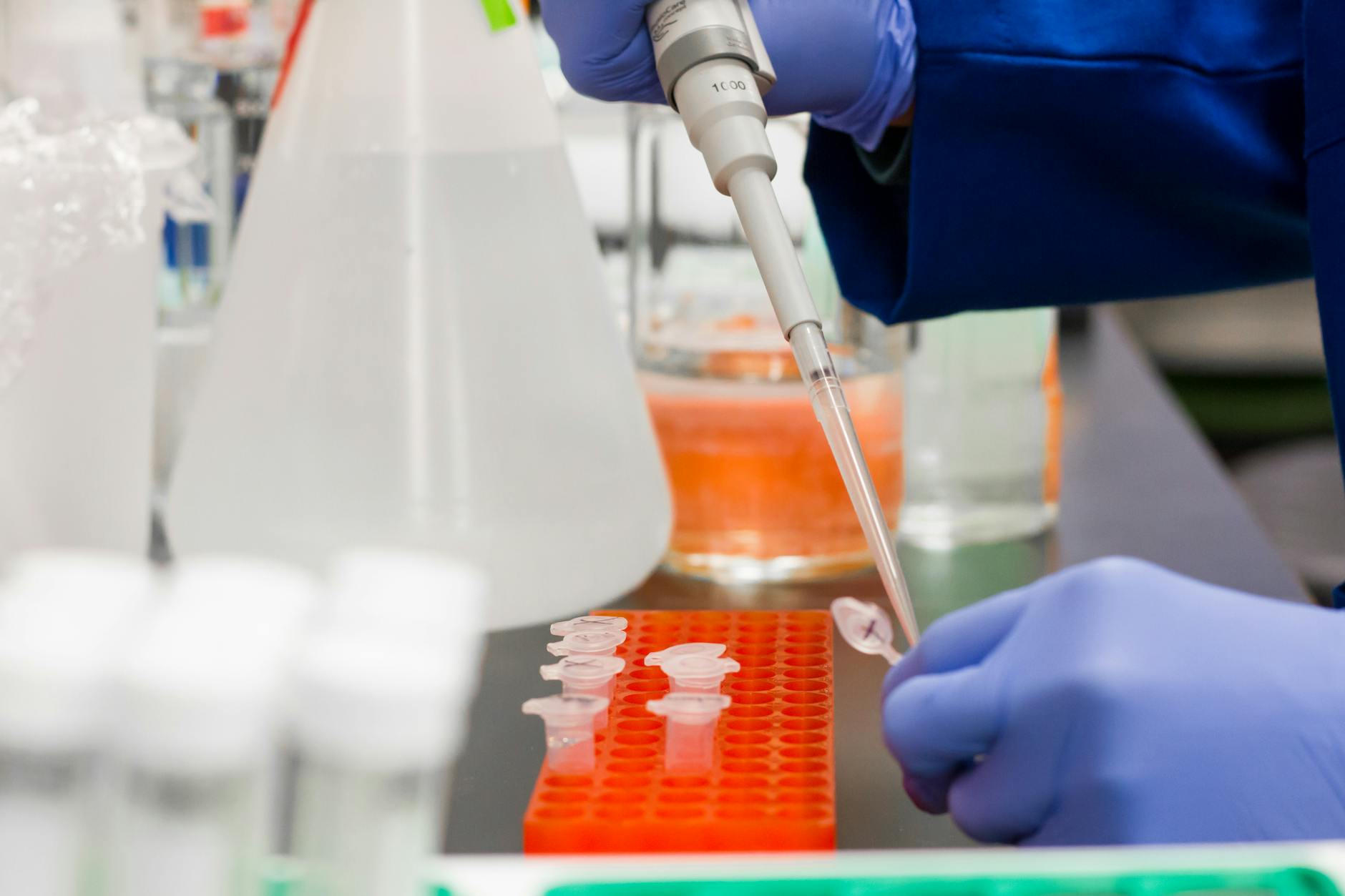
Blurred image of a scientist wearing a face mask, googles, blue gloves and using a pipette and petri dishAAAS IF/THEN® Ambassadors Program and Lyda Hill Philanthropies select an inaugural group of 125 women trailblazers to serve as role models for middle-age school girls to spark their interest in science, technology, engineering and math.

New students - 10 library tips to get you started

New Birkbeck students - 10 library tips to get you started

  1. Explore this subject guide for guidance on finding books, ebooks, using the databases and finding journal articles. 
  2. Order your ID card online through your My Birkbeck profile. Your student ID card is your library card.
  3. Learn how to search for books on the Library catalogue and how to find them on the library shelves by learning what the numbers on the book spine mean.
  4. Learn how to recognise different items (books, book chapters, journal articles) on your reading lists.
  5. Renew borrowed books by logging into the library catalogue with your library barcode number and your pin (the last four digits of your student number) Logging into your library account also lets your request reservations for books that are all out on loan. 
  6. Search for an online journal from the Ejournals search bar on the library homepage. Search by title of the journal rather than title of the article.
  7. Get feedback on your essay writing before you submit assignments with Studiosity (available 24/7 through your My Birkbeck profile). You can access Studiosity up to ten times in the academic year.
  8. Top up your print credit online for printing and photocopying. The library's photocopiers also have scanners for emailing yourself documents. 
  9. Connect your phone and devices to our WiFi network, Eduroam and get Office 365 through the My Software tab on your My Birkbeck profile.
  10. Get to know your library on a library tour.

Monday, 3 June 2019

Science Week 2019

Science Week 2019 takes place 24th - 27th June and there's a great programme of events to participate in from each of the departments in the School of Science.
Full details and booking information can be found on the Birkbeck website
http://www.bbk.ac.uk/annual-events/science-week/science-week-2019


Monday, 20 May 2019

The Great Science Publishing Scandal

A 28 minute radio programme in which Matthew Cobb, Professor of Zoology at the University of

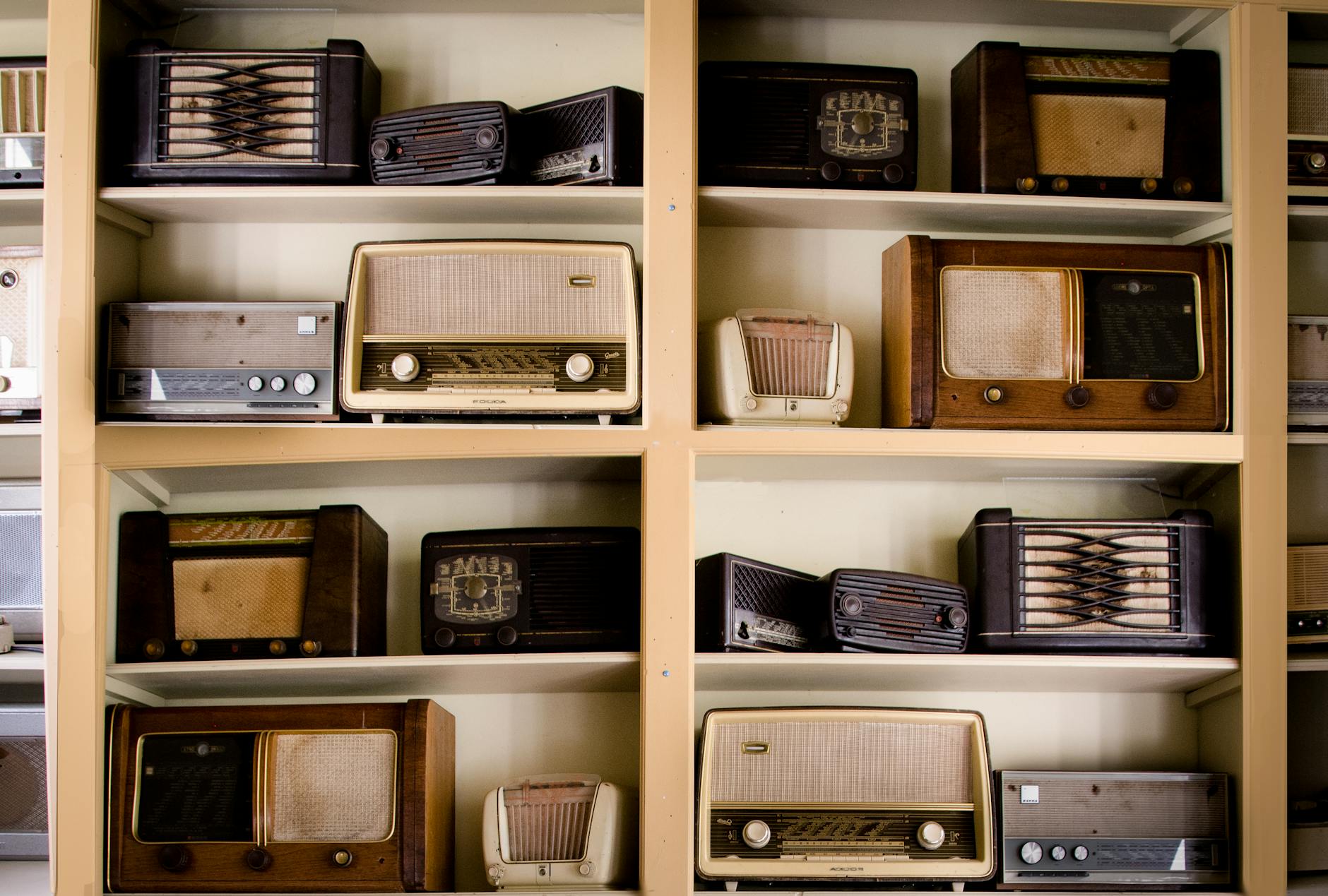
Picture of a variety of radios on shelves
Manchester, explores the hidden world of prestige, profits and piracy that lurks behind scientific journals.
If you want to know about how the business of academic publishing works, then this programme provides an insight. 

https://www.bbc.co.uk/programmes/m0004l7k

Friday, 29 March 2019

10 reasons to love libraries

Image of shelves of books with light bulbs hanging from the ceilingThe British Library held and event, For the Love of Libraries with authors authors Philip Pullman, Salley Vickers and Jacqueline Wilson along with the CEO of the Reading Agency, Sue Wilkinson. The blog post 10 reasons to love libraries summarises the event.

Thursday, 28 March 2019

How might Plan S affect chemistry research?

Plan S aims to make publicly funded research openly available after 1st January 2020. 

With this in mind the Royal Society of Chemistry has prepared a five-minute video that discusses Plan S, and the wider implications of the move to open access for the chemistry community.

Plan S, and how it could shape open access as a whole, is a developing topic, and it is one that the Royal Society of Chemistry aims to help you navigate. 

Watch the Royal Society of Chemistry's video about Plan S and chemistry research.


Monday, 25 March 2019

WomeninSTM Reading List from Oxford University Press

Oxford University Press have put together some reading about women that have contributed a wealth of knowledge and experience in the Science, Technology, and Medicine fields (STM), to help the progression of society.

Explore a collection of chapters online featuring just a few of these women in medicine, such as Marie Curie, Florence Stoney, Cicely Saunders, Rosalyn Yalow, and Mary Broadfoot Walker.

Monday, 18 February 2019

Managing your references with EndNote - Webinar 28/02/2019


This webinar is organised and delivered by staff at Web of Science. lt will include:
  • a typical workflows researchers follow to manage relevant publications they have discovered and correctly cite them in a publication of their own. 
  • The use of Kopernio to help pull together full text and metadata 
  • Use of the online and desktop versions of EndNote. Please be aware that Birkbeck only has access to the online version. 

•             Date Thursday 28th February at 10am London (45 mins).

Wednesday, 6 February 2019

Celebrate Chinese New Year with Springer - free access to papers and books chapters for a limited time...

Get 100 papers & 88 book chapters in all subject areas.100 papers & 88 book chapters in all subject areas.
This access runs up until 20th February 2019.

Friday, 1 February 2019

Lab notebooks - handwriting at the core of science - British Library blog post


23rd January was world handwriting day, the British Library took this as an opportunity to look at examples of lab note book past and present. How does yours compare? Do you still hand write your lab book or make use of online tools like Benchling?

https://blogs.bl.uk/science/2019/01/lab-notebooks-handwriting-at-the-core-of-science.html  

Pen and notepad

Monday, 18 June 2018

Science Week 2018

Science Week 2018 has arrived!

It's free to book a place at any of the lectures happening during the week, so make the most of learning from experts in their field of study. You can also come and take a look at the book display in the library, which reflects the subjects of the talks. 

Monday, 4 June 2018

Science Week 2018

Science week will be from the 18th-21st June 2018.  

The Rosalind Franklin lecture is by Prof Eva Nogales from UC Berkeley on on her work in cryo-electron microscopy2018 is the 60th anniversary of the death of Rosalind Franklin.

Earth and Planetary sciences will be presenting talks on Shark's teeth and the Paektu/Changbaishan volcano that spans the North Korea/China border.  

Psychological Sciences will present talks on self-representation of body and mind and building resilience in breast cancer.

Take a look at the full programme and book


Monday, 14 May 2018

Exam time in the Library

How can we help feedback boardWe're in the midst of the exam time now with students doing exams through into June. You may have already noticed the Feedback Board in the Library, we're asking what would be useful/helpful to you during the exam time, so please do ask us questions and make suggestions. You're welcome to email with suggestions as well. 


Taking a break cards and ear plugs
If you want to block out any noise while you're studying in the Library, you can get ear plugs from the issue desk and help desk. 
You may also want to make use of the take a break cards, so people know when you left and when you'll be back. If you do take a break, please make sure you take any valuables with you. 


Exam term book display
There's also a book display near the Help Desk on the first floor with titles aimed to help you get through the exam time. 


Coming soon, near the seminar room, we'll have a display of books if you want to take a break from your revision and studying. Read for relaxation and well being as well as learning!

You can follow @BirkbeckLibrary on Twitter, #BBKLib #examtime

Friday, 11 May 2018

Arts Week at Birkbeck - 14th - 18th May


Multicolored Abstract PaintingWhile not strictly related to Science, there's the opportunity to learn something new with a programme of really interesting events happening over the course of Arts Week at Birkbeck. How about, Bee Composed Live: honeybee communication or  Rare books London: a talk on printing and book binding. Perhaps Pharmacosexuality: sex and hormones or Anima shorts: a selection of animated short films on mental illness...
That's just a taster! There will be over fifty events including lectures, readings, film screenings, workshops, guided walks, performances and panel discussions, as well as two exhibitions.  
All events are free and open to everyone. 


Tuesday, 8 May 2018

Three Minute Thesis Competition


On 23 May 2018 we are holding the 2018 Three Minute Thesis (3MT) Competition from 18.00 – 21.00 in the Clore Lecture Theatre, an event which provides an opportunity to celebrate a diverse range of work from PhD Researchers across the College, and to invite you to come and support the Birkbeck PhD students taking part as they each compete to communicate their thesis in just three minutes.

The Three Minute Thesis Competition is a global event and the Birkbeck winner will have the opportunity to go through to the UK semi-final.

This year we are combining the 3MT event with a poster competition and prizes will be awarded for both competitions on the night: £500 for the best 3MT entry and £300 for the best poster. The winners will be chosen by an expert panel of judges and the audience will also get a chance to have their say by picking a people’s choice winner for the 3MT competition. A drinks reception will be provided after the 3MT event and you will have a chance to view the posters and meet with those who take part in the competitions.

How to attend
If you would like to attend this event on 23 May please register here.

Please note:
·         This event will be a great opportunity for prospective PhD students to find out more about the successes of Birkbeck research students and to be inspired to study for their own PhD - please do highlight the event to prospective PhD student who you think would benefit from attending.

·         There are still opportunities for PhD students to enter both competition: a 3rd 3MT training session will be held on 10 May and PhD students are invited to submit entries to the poster competition by the end of Friday this week, 11 May. Further details are available on the event page.

Monday, 11 December 2017

Christmas vacation - Library arrangements


abstract, blur, bokehYou may be aware that Birkbeck’s main Malet Street building will be completely closed over the Christmas period, from 16:00 on Thursday 21 December 2017 to Tuesday 2 January 2018 inclusive. 

This is to allow for essential maintenance work on the building’s electrical infrastructure. 

As a result there will be no access to the Library or any other part of the main building for students or staff. 

For full details of alternative arrangements, please see the opening hours information on the Library website. You will also find details of what's available while the library is closed for Christmas.

TB or not TB - A talk from Dr Sanjib Bhakta about his research in the Dept of Biological Sciences

In May 2017 Dr Sanjib Bhakta came to talk to Birkbeck Library about his research into antibiotic resistance, the title of his talk: Thinking beyond the obvious, TB or not TB? Tackling antimicrobial resistance in the superbug.
An accomplished and widely published scientist, Dr Bhakta's enthusiasm for this topic engaged a non-scientific audience, helping us understand complex scientific processes and leaving us with a good understanding of the basics of the research he has been involved with to date.   

To follow is a summary of what you can expect when you watch and listen to Dr Bhakta's talk:


  • An overview of TB, how it works, what it does, how it infects and thrives in host cells, how it can be dormant and then wake up again, during which time it can become more virulent and resistant to antibiotics. 
    We learn how TB requires a cocktail of 4 drugs every day over a period of 6 months to combat it, that there are side effects and consequences of these drugs.
    Dr Bhakta talks about the complex structure of a TB cell in a clear and understandable way, explaining that the cell has a fatty acid layer which means that any standard antibiotic won't get through the cell wall. TB cells are continually evolving, through chemical and biological activity, making things even more difficult in antibiotic development, but this kind of research is helping to address these difficulties. 
  • Focus of research: how Dr Bhakta and his team study from biologists point of view how these germs live in the host cell, the different physiological stages. This is linked with the existing understanding and knowledge of antibiotics, which in turn forms antibiotic development.
  • We learn how antibiotics work, how they try to disrupt and shut down the different mechanisms of the bacterial cell. We start to gain an understanding of how the immune system and TB work and that in patients with HIV, TB is a high threat as the highly active antiretroviral treatment for HIV clash with the cocktail of drugs needed to be taken to stop the TB. So more research is needed to address this aspect of treatment.  There's a reality check in that, at the moment, no antibiotic that can eliminate dormant TB bacteria.
  • Dr Bhakta gives an introduction to antimicrobial resistance (AMR), explaining how it develops 1) intrinsic 2) inherited
    We see a visual demonstration of a bacterial cell
    inside the host cell  to show how antibiotics work, adding to our understanding of how problematic this area is.
  • The importance of the structure of the antibiotic, so that it can stop the function of the enzyme in the bacterial cell is explained as is the thousands of biochemical reactions - communications that are happening, the pathways created, for bacteria to keep going, stay alive and develop inside the host cell.
  • We learn about the 5 key mechanisms contributing to antibiotic resistance that are being researched. The idea and exploration of targeting multiple enzymes, of limiting the pump mechanism of the bacterial cell which can pump out the antibiotic.
  • We hear about how antimicrobial resistance in TB is being tackled with new drugs with novel mechanism(s) of action and how it will take many years to design and develop new classes of antibiotics for TB. A new antibiotic needs to act on a new molecule, different function of a cell, different mode of action. It's this kind of research that's contributing to figuring out how to do that.
  • Plants as a major source of antibiotics, natural sources.
  • Dr Bhakta is convincing in his assertion that science has to be collaborative, locally and globally. He describes the work that chemists, structural biologists  are doing  together to grow TB germs at different levels, nurturing them in some experiments and stressing them to see how they work. This along with using biology and chemistry together to discover molecules that then have novel anti-tubercular properties.
  • We learn about the work in the labs using assays to help understand the function and working of enzymes and the SPOT culture growth inhibition methodology developed by Dr Bhakta and his colleagues.
  • Other developments that have come from Dr Bhakta's research include a compound library from natural products and synthetic molecules - evaluation of novel chemical entities.
  • There have also been interesting developments in connecting the research science to the end products with collaborations looking at how a molecule works in different areas and what happens when you bring all of that knowledge together. A discovery of a connection between painkillers and TB. The results of whole cell screening show that the painkiller carprofen is an effective TB killer! There's more research to be done to see how this can be developed in effectively treating TB. 


What I enjoyed in Dr Bhakta's talk is the way that he made complex scientific research understandable and accessible to those of us that don't have an extensive science background. The way that he connects the research and discovery that's happening in the labs and how their research is impacting on real life is really inspiring. 
Dr Bhakta was able to summarise the key milestones in his research career to date, which demonstrates that this type of scientific research is very much an ongoing process and that there will always be new things to learn, different approaches to take and discoveries to made that are likely to have a direct impact on our health. 
It's great that his research informs teaching on the Bsc Biomedicine module Microbes and Antimicrobials and on Msc Microbiology and MRes module, Medical Bacteriology as Birkbeck students are learning from an active researcher, making their learning more dynamic and current. 

Watch, listen and learn from this talk yourself: Thinking beyond the obvious, TB or not TB? Tackling antimicrobial resistance in the superbug.

Learn more about Dr Bhakta's work and his author profile by watching this short screencast which shows an author search in Scopus which shows Dr Bhakta's published research outputs.